
There are a lot of stories out there about the estrangement between adult children and their parents. You might be going through it yourself.
I’ve reached a new understanding of my estrangement with my own parents, so I wanted to discuss how it feels to go no contact with a parent, emphasis on the “feels.” Rather than detailing what happened, I’m going to talk about the emotions that I went through, how I felt through the whole process.
I’ve also included some resources that have helped me as I go through this estrangement and other considerations I’ve found have added to my comprehension of why myself and so many others are going through this!

[do_widget id=text-3]
*Disclaimer: I am human. I write from the heart and from experience: not to suit any algorithm or perfectly curated feed. I have chosen to continue to write a blog in the days of Reddit and Substack because it means that I OWN my articles and ability to finance my writing. I am in the process of removing all affiliate links from my site and minimizing ads so that you may focus on the article itself. Enjoy!
Parental Estrangement On the Rise in 2025
Unless everyone you know has a perfectly healthy relationship with their parents or you live under a rock, you probably have heard about this trend of parental estrangement.
According to a survey by Karl Pillemer, 27% of people in the USA over 18 had cut off contact with a close family member. (Other sites published between 2019 and 2025 claim about one quarter of people have an estrangement as well, though without citing their source.)
Sure, everyone has their reasons, from blaming Millennials for being narcissistic, to blaming socially rigid Boomers. But it’s pretty clear that there’s a massive generational divide.
What did parental estrangement look like in the past?
With the extreme drama surrounding the parental estrangement trend of the 2020s, you’d think this had never happened before in history!
NOT TRUE.
Many immigrants who leave their home countries in search of a better life, often leave behind mothers, fathers, siblings, friends, and their entire culture. I’m thinking of early European settlers of the Americas because that is where I have familial experience. Especially before communication across the seas became easier, once European settlers made that voyage across the Atlantic, they were completely severed from anyone who remained in their home country.
One set of great grandparents on my mother’s side were actually estranged from their parents. According to my research on Ancestry.com (which, admittedly, may be flawed), they got pregnant and immediately fled from Lithuania to the United States, where they married and had their first child, my grandfather’s oldest brother, just a few months later.
I can’t imagine them starting a family in the Midwest in 1913 and having much contact with their parents and siblings back home. (My grandfather did reestablish contact with his relatives in Lithuania when he first got the internet in the 90s!)
Also, if you consider the LGBTQ+ community, and especially in the 80s, there were mass estrangements between family members who were not supportive at best or terribly homophobic at worst.
What about the slave trade of African peoples? Everyday humans ripped from their families without a final word, to be sold to the highest bidder?
I’m sure there’s a whole host of other examples of parental estrangement from history, but these are just a few I could think of off the top of my head.
Why do I bring this up?
I want to make the point that you are not alone. This might feel like the end of the world to you, but it doesn’t have to be. There have been lots of strong people who have built great things for themselves after losing a relationship with someone they loved.
You’re not alone.
Going No Contact with My Parents and Brother
I’m an estranged daughter and sister. I don’t speak to my mom, dad, or my only brother and his family.
I started limited contact in 2020 and moved into full no-contact approximately 2 years ago.
I had promised my mom (years ago) that I wouldn’t share things she has said on my blog, and I intend to honor that.
But I will share what *I* went through emotionally so that if YOU are going through some of the same things, you might not feel so alone and might understand how to process those emotions.
For each phase of the estrangement process, I’ll explain how I was feeling and what sorts of things I did, resources I found helpful, and how I moved through that emotion.
1.) Early Realizations: Frustration. Crushed.
My story starts in 2020 when I tried to discuss politics with my parents and brother and his wife. I talk a little more about the experience here in my article, Losing Family Over Politics.
It was incredibly frustrating, like trying to communicate with someone who spoke a different language. I felt like my parents had zero respect for me and for my opinions. It felt like their ideal daughter was someone who never spoke her mind.
(This should be obvious, but I’m going to spell this out here: I can make no assumptions about my parents’ intentions. I only know how I felt due to their actions.)
I was crushed after realizing that I had thought I could always count on them, and I was wrong.
Surprisingly, I didn’t feel a sense of shame that this was happening. It felt like my truth was finally coming to light, and I was not at all ashamed of that.
Resources and Help
During this stage, I urge you to be gentle with yourself. This initial fracture can be really jarring. Be with people who are in your corner, who will listen to you and support you in the ways that you need.
I also encourage you to take good care of your physical health. In October of 2020, I had just finished breastfeeding my youngest a couple months earlier, and then this extremely emotional period hit. My health TANKED.
I gained a bunch of weight, I had acne all over my face, I was incredibly fatigued. The combination of everything I was going through, physically and emotionally, made my endocrine system nearly collapse. (It’s a thing, check it out.)
This article, while being a little general about emotional trauma and self-care, does offer quite a few helpful tips when going through an emotional time.
2.) During 2 months estrangement: Confusion
Something was lost in translation, and I spent several months trying to figure it out. I blocked both my parents’ numbers from October through around Christmastime.
It gave me the objectivity to examine my relationship with them from a new perspective, and honestly, it answered so many questions, but posed SO many more.
This rift in our relationship had been caused by my wanting to talk about politics. (Keep in mind, it isn’t that we had never talked about politics before, but all the occasions that I can remember were on their terms.)
But what would have happened if I had wanted to talk to them more about other, more serious issues and questions I had had? I felt like the reaction would have been much worse.
This period was full of confusion for me. I had felt like a burden to other people for so long. Was this because of my relationship with my parents? How they had treated me in childhood? Do they think I’m a burden to them if I try to break them out of their limited worldview?
I had a million burning questions and so few answers. But when Christmas rolled around, I unblocked their numbers and we slowly began talking again.
3.) Attempted Relationship Repair: Extreme Ambition
This is where things get interesting.
When I initiated contact with them again, I WAS GOING TO FIX THE RELATIONSHIP, DAMMIT!
But it wasn’t that I was just going to fix the relationship for them, I was going to honor myself too.
I had a fire in me, a drive to ask the right questions, to do the right thing, to say the right things in the right order with the right tone of voice to get them to see just how they had hurt me. To see how I wanted to be treated, how I wanted to be respected in the relationship.
I wasn’t going to walk on eggshells, but I was going to be gently honest. I was going to be positive. I was going to be helpful in nudging my parents into a healthier style of communication.
This period lasted a couple of years while I tried everything I could think of to repair the relationship.
Healthy Communication Styles
At this point, I want to share a little about healthy communication. According to VeryWell Mind, healthy communication is:
“the effective exchange of thoughts and feelings between people.”
It’s pretty simple. The key word there is “effective.” Things are effective when both parties participate in active listening and feel listened to. Effective communication happens when both parties respond with empathy, take accountability, and actively try to see the other person’s point of view.
Please, for your own sake, and for the sake of the other person whose relationship you’re trying to repair, make sure you’re actively making an attempt to have healthy communication!
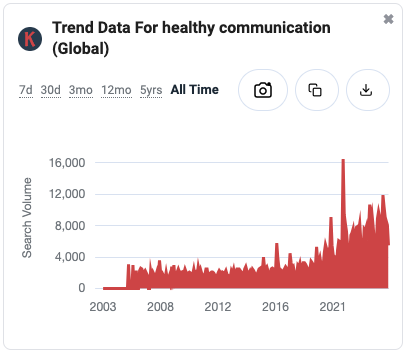
The great news is that more and more people are looking for resources on how to communicate in a healthy manner, so you’re going to get a lot more comprehensive information than you used to!
Resources for Repairing Relationships
I wanted to learn everything I could to repair my relationship!
I discovered Plum Village and went on a virtual retreat to practice meditation and learn about skillfully interacting with other people. Here is one Q & A from a later retreat, I found to be helpful.
Surprisingly, I sought information on the other end of the spectrum, in Kasia Urbaniak’s teachings. She taught me about the subtle power dynamics that are the undercurrent in every conversation or interaction, as well as how to make sure my underlying message and my words matched (known as congruence.)
But I also realized that my parents’ emotions were not my responsibility. Of course, I wanted to engage with them in the most compassionate, skillful, and honest manner. But even if I thought I did everything perfectly, I couldn’t control how they’d respond.
It was a difficult truth.
What’s a relationship built on?
To me, a relationship is built on mutual respect. Plain and simple.
I see you as a complete human being with needs, desires, and flaws. I recognize your strengths. I recognize when you have hurt me, but I want to share that with you in a way that does not insult your integrity or demean you.
I want to honor who you are at your core, and that requires you to be vulnerable with me and show me who you truly are. This applies to me as well.
I want to celebrate with you! I want to be there when you need support. I want you to celebrate when I am proud of myself! I want you to be there for me when I need support!
I have that relationship with my husband, a nearly-effortless, give and take, submissive and dominant, equal relationship that is emotionally fulfilling in some divine ways! And once I had seen what was possible with a healthy relationship, I don’t think I was willing to go back.
RELATED POST: How to Meet Someone Where They Are
4. Final Breaking: A Loss of Hope
I kept trying. I held out hope for so long that they would see me for who I truly was.
Ask my husband. He was my sounding board through it all. He kept reminding me that I wasn’t responsible for my parents’ actions or for the emotions they felt. I understood in my head, but not in my heart.
I pushed one too many times asking them to have respect for me and to learn to communicate in a healthier manner, and they immediately cut off contact.
(Yes, that’s right. Most estrangements nowadays happen from the adult children cutting off their parents, but this time, it happened the other way around.)
I decided that I would honor their choice to stop talking to me until they reached out with the information that they had been working on their communication (maybe going to therapy) and wanted to try again in the relationship.
I was no longer trying to fix our relationship. I was allowing it to be whatever my parents decided it was.
I had thought that only if I could say exactly the right thing, my parents would understand me. If only I could touch their emotions in the right way, they would see that I meant no harm and only wanted to connect with them.
If only I could have been the perfect daughter, they would love me.
But it felt like to them, their idea of a perfect daughter was one who had no agency. Who always put the needs and desires of her parents before her own. Who was willing to suppress her own truth for them.
That wasn’t healthy, and it wasn’t what I needed.
And it reached the point that the chasm between their ideal daughter and the truth of my own experiences was so wide that there was no chance of reconciling.
It was incredibly painful, and it resulted in a complete loss of hope. I lost hope not only for a fulfilling relationship with them, but also for the world.
It seems dramatic, I know, but I can’t help the way I felt. After all, I had learned to honor myself and my emotions, and that’s quite simply how I felt.
How to Support Yourself When You’ve Lost Hope
I LOVE this article from Avion Howard, because it encapsulates exactly how I felt. I had little interest in doing much of anything or striving for anything. I lost my goals and my motivation.
But finding that hope again requires effort. It requires discipline. We CAN find that motivation again!
So finally, 2 years after that last interaction with my parents…
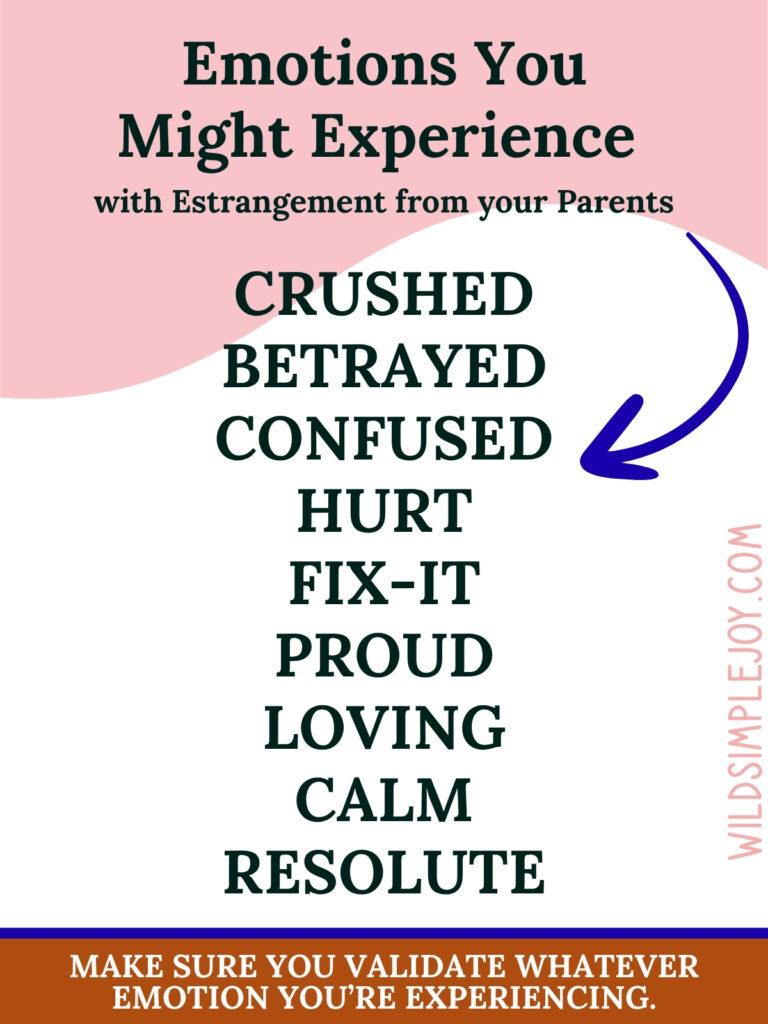
5.) Years later: Calm, Powerful, Loving, Free
You might think it’s mean of me to find a loving emotion in estrangement from my parents. But I am proud of the decision I made to put myself and my children first and not to reach out. I have so much love for myself and my husband and kids and it felt powerful to stick to my decision not to speak with my mother unless she made the conscious choice to learn to communicate in a healthier way.
Honestly, it was a decision made out of love to not talk to my parents again. I was honoring their decision.
For a long while, going no contact with my parents brought all kinds of inner turmoil to my life. Did I do the right thing? Could I have reached them? How could I give up on them like that? But ultimately, it has brought extensive calm to my life.
Because here’s the thing: that inner turmoil wouldn’t go away if my parents were in my life.
That self-doubt and worry that I was constantly doing and saying the wrong thing wouldn’t go away if I had continued to fight for the relationship. It’s only that by cutting them off, I replaced my interaction with them with that feeling of inner turmoil.
6.) I feel proud of myself
Three years later, looking back on my old texts with my mom, I’m so proud of myself.
I’ve been the strong, fierce, loving, dedicated woman this whole time.
I’m proud of how I stood my ground. I wasn’t entirely emotionless in our texts, but I was very direct and objective.
I didn’t only focus on the negative and what was wrong with the relationship, but I asked a LOT of questions of her so that I could understand my mom better. I even gave her compliments, telling her the things she did in my childhood that I loved!
I was clear about the kind of relationship I want, not just from my parents, but from everyone in my life: one with healthy, open, and clear communication. One with an abundance of mutual respect.
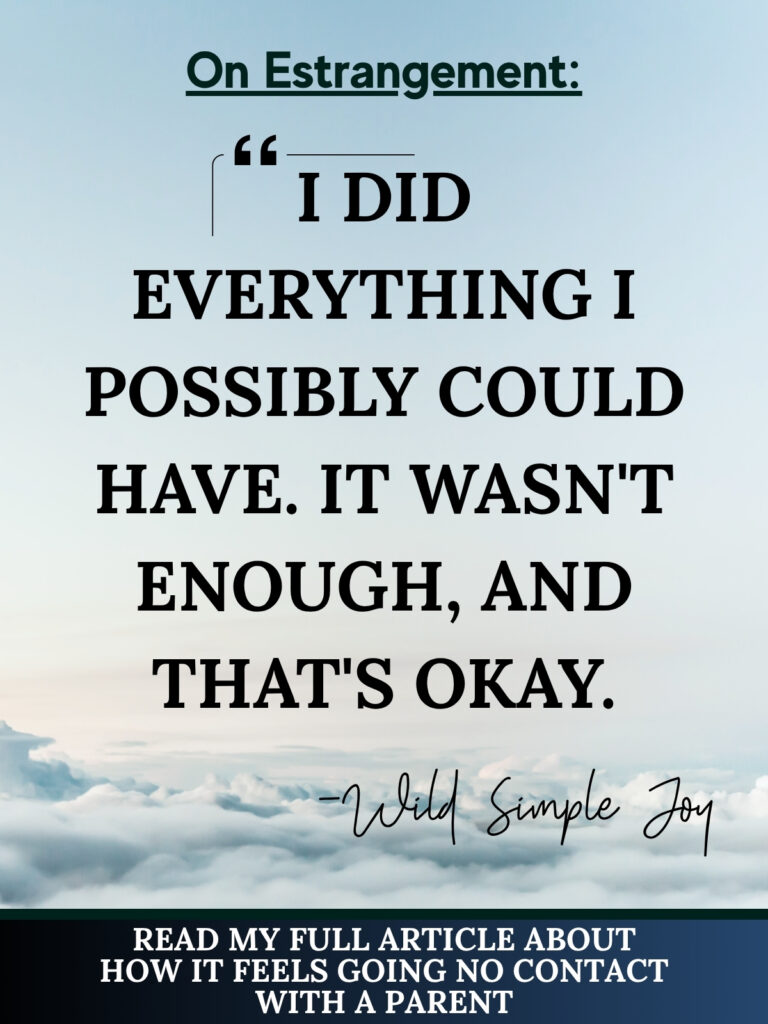
I did everything I possibly could have. It wasn’t enough, and that’s okay.
Conclusion
If you’re going through this, honor the feelings you’re experiencing. Everything you’re feeling, from confusion, to betrayal, to pride, to love, is all valid! Sit with your feelings. Give them permission to exist. Don’t try to change them. Not yet.
Let this experience guide you. How can this inform your relationships with others? With your spouse? With your own children?
This experience has certainly changed how I approach my relationship with my kids!
I promise that if you allow yourself to feel your emotions, you will start to move through them. And you’ll feel better about not just that situation, but everything in your life!